Therapy for Children with Early Speech Language Delay
Every child communicates in their own way and at their own pace. If you’re noticing your child isn’t using words, sounds, or gestures the way you expected, it’s okay to have questions. We’re here to help you sort through what you’re seeing, understand what it might mean, and take supportive next steps – without pressure or judgment.
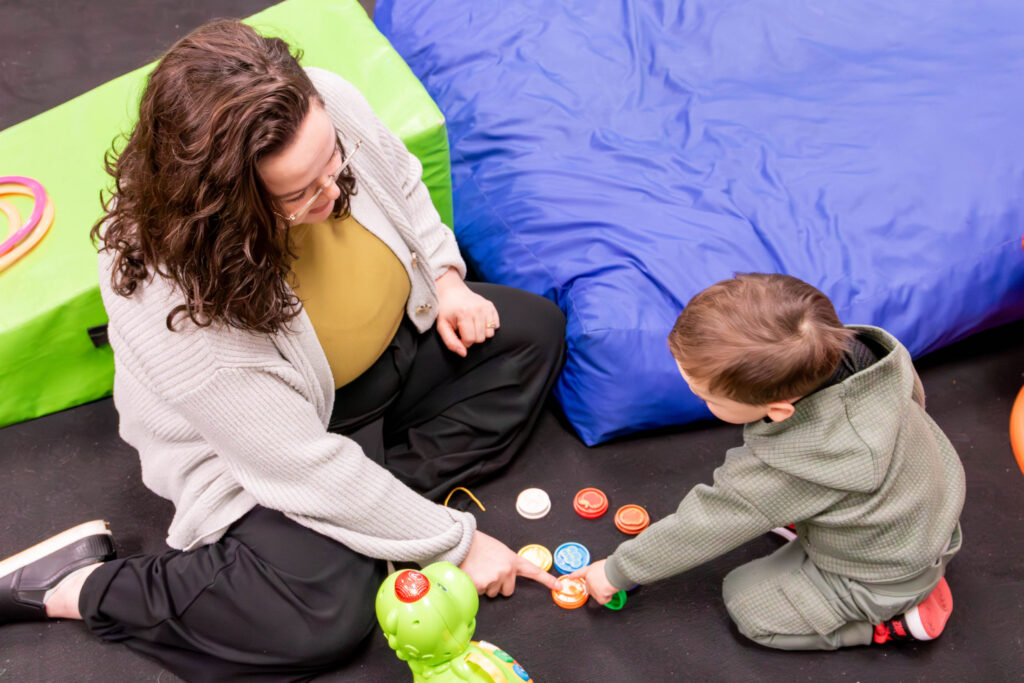
We provide therapy for children who may be experiencing an early speech delay with a focus on understanding each child’s individual communication needs, building on his or her abilities, honoring all forms of communication, and supporting families every step of the way. Early support can make everyday moments – playtime, routines, and connections – feel more accessible and more joyful.
What Is a Speech Delay?
Early Speech Delay refers to a developmental difference in which a young child’s speech and expressive language skills emerge more slowly or differently than expected for their age. Children with an early speech delay may have a limited vocabulary, use fewer words or sounds, or have difficulty combining words to communicate, despite typical hearing, understanding, and social interest. Early identification and supportive early intervention can help strengthen communication skills and promote overall language development.
Who Is Early Speech Language Therapy For?
Early intervention can be critical for children experiencing a speech delay.
Therapy may be a good fit for children who:
Use fewer words or sounds than expected for their age
Have difficulty understanding simple directions or questions
Rely mostly on gestures, pointing, or leading adults by the hand
Become frustrated when trying to communicate
Show limited interest in back-and-forth interaction or shared play
May stutter or have difficulty being understood

How we provide support:
Support the development of understanding language, including following directions, learning new words, and recognizing familiar routines
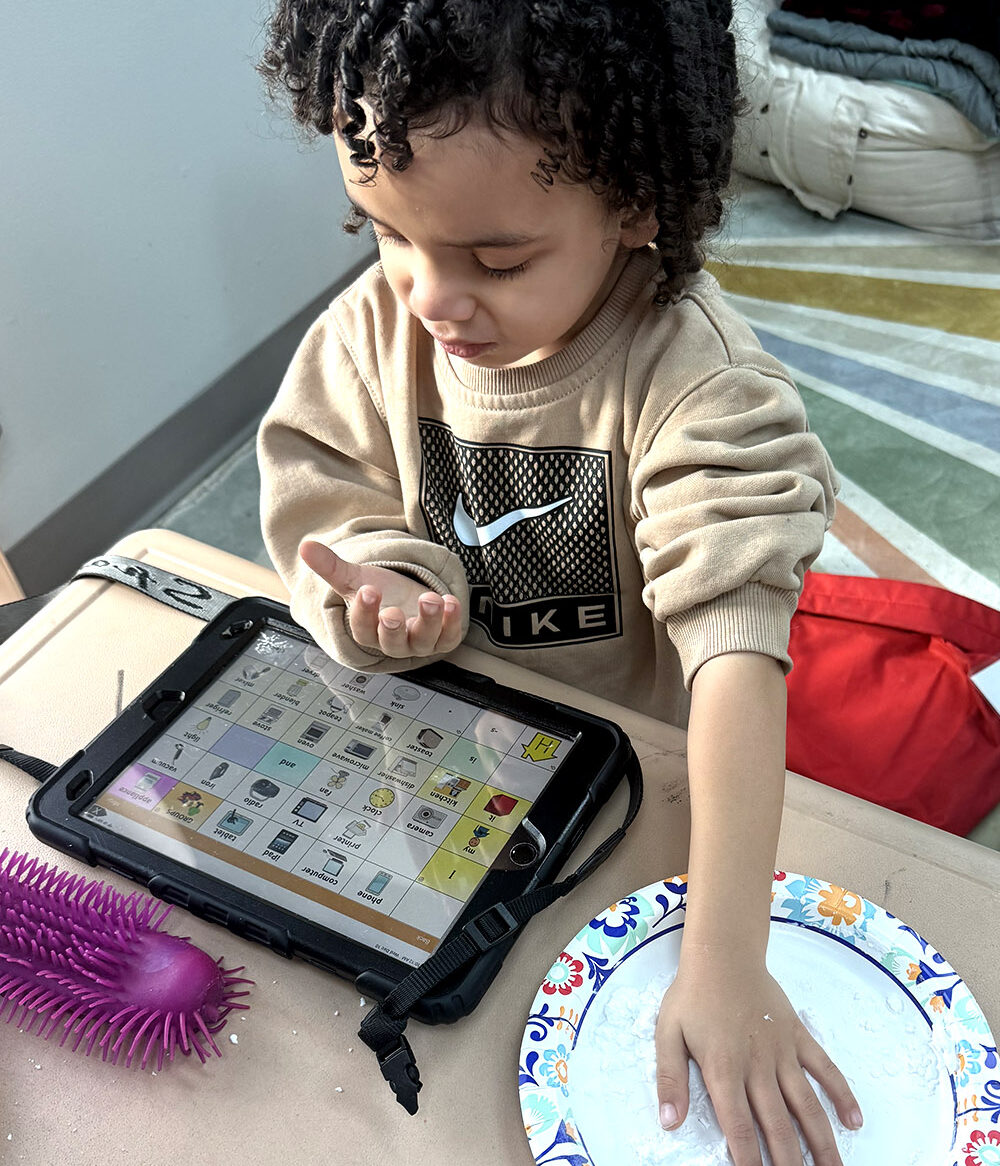
Teach ways to express wants, needs, and ideas using words, sounds, gestures, or alternative and augmentative communication (AAC)
Facilitate early social communication skills, such as turn-taking, joint attention, and shared play
Build confidence and motivation to communicate across daily activities and interactions
Our Approach to Speech Therapy for Children with Speech Delay
We believe early intervention speech therapy works best when it’s supportive, integrated, and centered on the child and family – not just isolated skills.
We take time to understand your child as a whole person, including their strengths, interests, communication style, and environment. Communication includes much more than spoken words – it can involve sounds, gestures, signs, facial expressions, and understanding language.
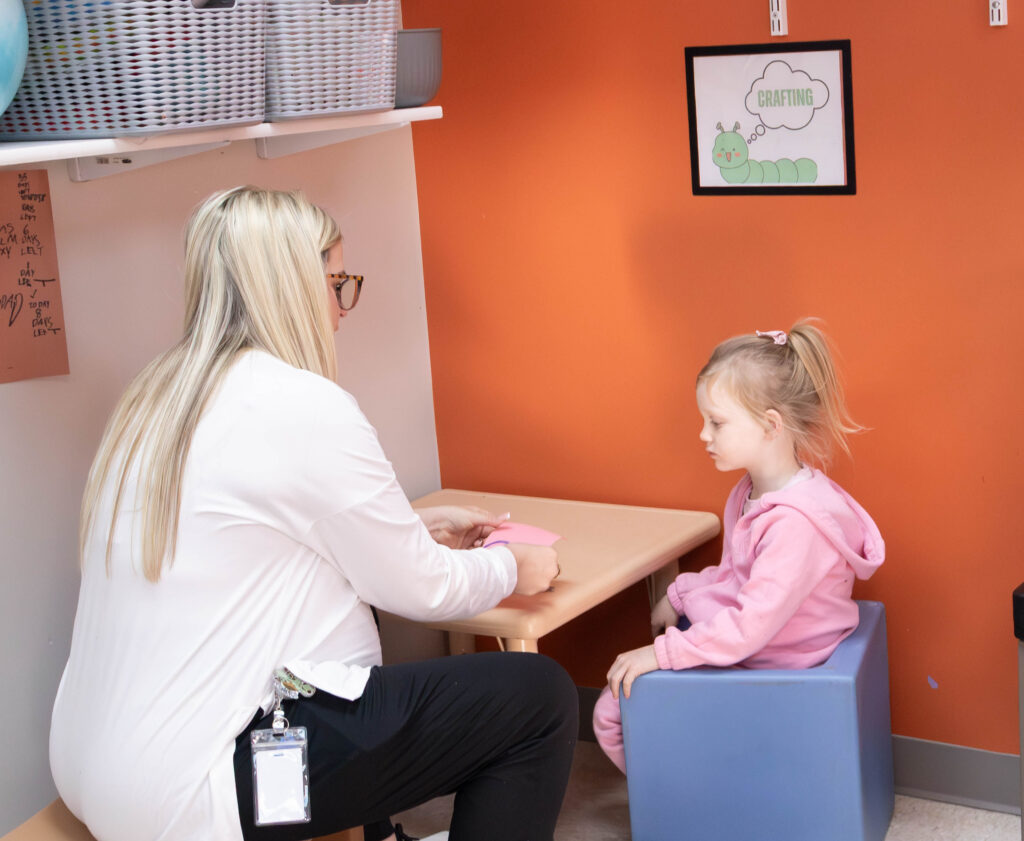
Our work focuses on understanding how each child communicates and helping them participate more fully in their world by expanding how they express themselves and connect with others. Speech therapy is play-based, relationship-centered, and designed to fit naturally into your child’s daily life.
When You Work With Us, You Can Expect:
- Strength-based care that builds on what your child already does well
- Play-based, engaging sessions that feel natural and motivating
- Integrated support, collaborating with speech-language therapy, occupational therapy, physical therapy, and behavioral therapy when helpful through informal consultation or formal therapeutic services
- Family partnership with clear explanations and practical strategies you can use at home
- Neurodiversity-affirming practices that respect different ways of communicating
Our goal is to support meaningful progress – skills that help your child participate, connect, and feel confident in everyday life.
When to Seek Support
You may consider seeking therapy if:
You have questions or concerns about your child’s speech and language development
Your child isn’t meeting early communication milestones and you’re unsure what’s typical
You hear “they’ll grow out of it,” but you want to be proactive
Communication challenges are affecting daily routines or social interactions
Reaching out doesn’t mean something is “wrong.” It means you’re being proactive and seeking support during a critical window of development.
What Families Can Expect
Starting therapy can feel overwhelming – we work hard to make the process clear, supportive, and human.
With us, you can expect:
- A thoughtful, individualized evaluation process
- Clear communication about goals, progress, and next steps
- Collaborative care across services when needed
- Realistic expectations focused on growth, participation, and confidence
- A team that listens, answers questions, and values your insight as a caregiver
We walk alongside you, celebrating progress and adjusting support as your child grows.